


Kirinyaga, Kenya · 1,500 – 1,800 m
Kenya: Tumaini Washed
Kenya: Tumaini Washed
White chocolate and butter, then violet. Finishes with blackcurrant, raspberry and red fruits.
Best brewed asFilter
Couldn't load pickup availability
With this order you earn 26 Tomassi Family points How it works
Always fresh Want coffee without thinking about it? With the Tomassi subscription we pick a specialty selection for you every month. Up to 20% off from the first delivery. Discover the subscriptionGoes well with
 Blend 1969
$14.00 · discover →
Tasting notes: White chocolate, butter, violet, blackcurrant, red berries, raspberry
Varieties: SL-28, SL-34
Process: Washed, aerobic fermentation
Country: Kenya
Region: Kirinyaga
Altitude: 1,500 – 1,800 m
Roast: we roast it after you order. The date is on the bag.
All of Kenya's brightness, none of the bite.
Tumaini is Swahili for hope. Up in these mountains the name carries real weight, because coffee is one of the few crops that lets a family plan for next year.
This Kenya heads somewhere unexpected. Alongside the blackcurrant and bright acidity you'd expect from the origin, this lot brings a creamy, sweet side – white chocolate and butter – that holds the whole structure up. The two personalities share the cup, and neither one hogs it.
Origin
Kirinyaga sits on the south-eastern slopes of Mount Kenya, just above the equator.
The soil is volcanic, red and deep, packed with minerals the mountain has laid down over thousands of years. Rain falls in two distinct seasons and the nights stay cool even in the hottest months. It's the perfect set-up for coffee: the cherries ripen slowly and build up sugars and aroma precursors that simply wouldn't form anywhere else.
Kenya's reputation for quality is no accident. It's the result of a system built over decades: a national auction that rewards the best lots, washing stations run by co-ops that answer to their members, and traceability at every step of the chain.
Harvest runs from October to December and it's all done by hand, selectively: pickers go back to the same tree several times over a few weeks, taking only the cherries that are perfectly ripe.
Varieties
SL-28 and SL-34 were born in the 1930s at Scott Laboratories in Nairobi, from a breeding programme looking for drought-resistant plants with better cup quality. Out of hundreds of candidates, these two made the cut – and ninety years on, they're still the benchmark for the origin.
They're demanding varieties: low yields, prone to disease, needing constant care. Plenty of countries have planted them without getting anything close, because outside Kenya they lose most of what makes them special. A big part of Kenyan coffee's unmistakable identity comes down to them.
Process
This lot is washed the Kenyan way – one of the strictest schools in the world.
The cherries reach the washing station the same day they're picked, so no fermentation starts on its own. They're weighed, sorted a second time to remove unripe or damaged fruit, and then pulped – stripped of skin and flesh.
What's left is the bean, still in its parchment and coated in mucilage, a sugary layer that has to come off. So the coffee rests in tanks, open to the air, while naturally occurring yeasts finish the job: a fermentation watched step by step and stopped at exactly the right moment, based on constant checks.
Then it's into the washing channels, where density makes the final call: the heaviest beans, which are also the sweetest, carry on; the lighter ones are set aside.
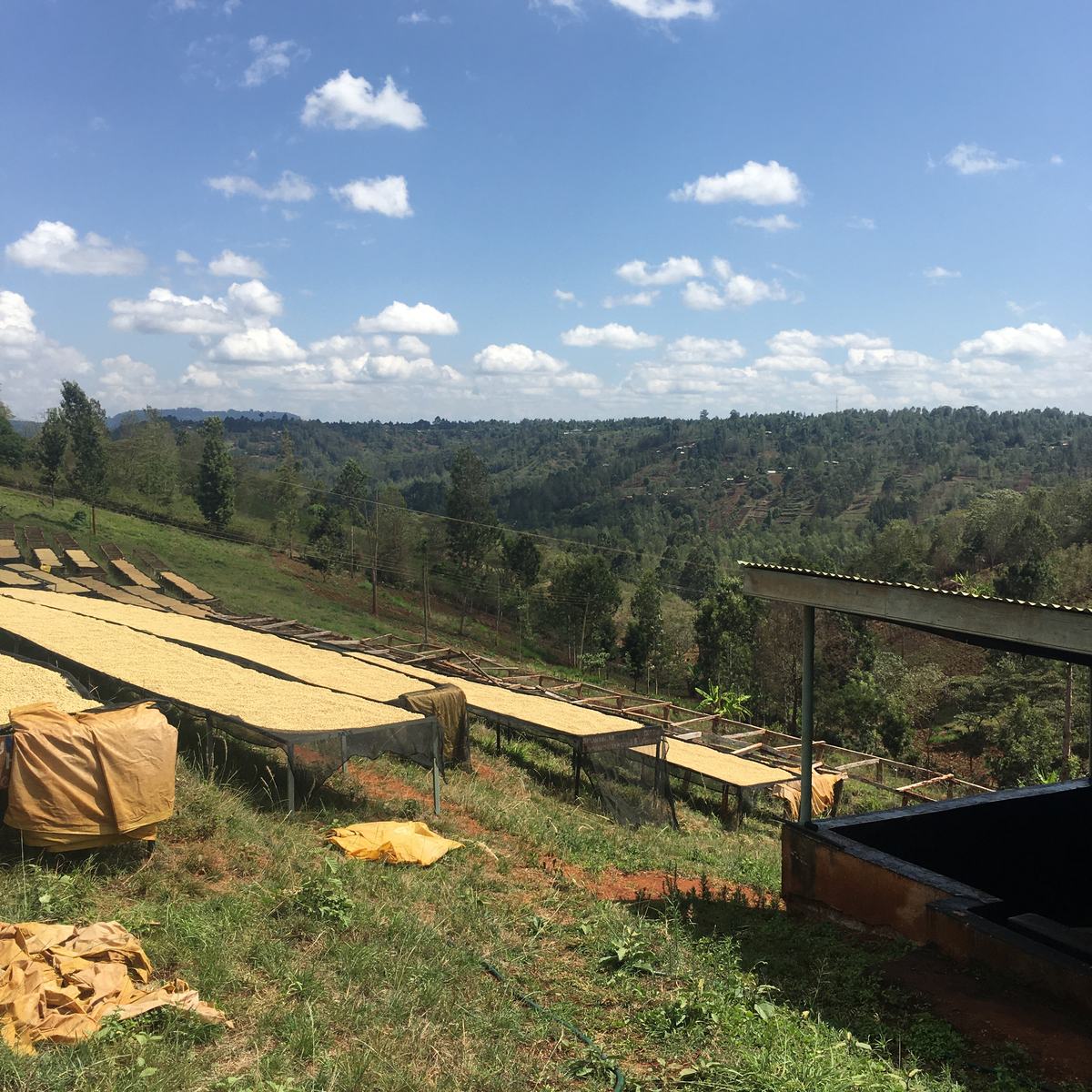
Drying happens on African beds, raised mesh tables that let air flow over and under the beans. The coffee is turned by hand, constantly, for anything from one to three weeks depending on the weather, until it hits the ideal moisture level.
In the cup
It doesn't open with fruit. It opens with sweetness. White chocolate leads the way and butter gives it a round, enveloping texture that's unusual for the origin.
On top of that comes violet, delicate and lingering, followed by the fruit: full-on blackcurrant, raspberry and a mix of red berries that brings Kenya's trademark lively acidity.
It's a coffee that changes in the cup. As it cools, the floral note opens up and the sweetness stretches out, giving a more complex profile than the first sips.
Why choose it
Because it solves the trade-off this origin almost always forces on you. Usually Kenya makes you pick a side: brightness and acidity, with tense, sharp cups, or sweetness, at the cost of losing what makes the origin recognisable. Tumaini does both. That's rare.
It's also the lot for anyone who's never quite got on with Kenya because it felt too acidic or too sharp: the brightness is all there, but it sits on a sweet base that keeps it balanced from first sip to last.
How we'd brew it: filter, which gives the florals room to breathe.
Don't rush it. Let it cool: the second half of the cup is where it really shines.


What you need to know
Origin
Kirinyaga, Kenya – Tumaini
Process
Washed
Variety
SL-28, SL-34
How we’d brew it
Filter
In the cup
White chocolate and butter, then violet. Finishes with blackcurrant, raspberry and red fruits.

A profile built at the roaster, roasted on Tuesdays.
We roast on Tuesdays in Aprilia, in small batches, with a profile built at the roaster specifically for this coffee. Who grew it, where, and how it was processed: you'll find all that in the details above.
- Origin
- Kirinyaga, Kenya – Tumaini
- Variety
- SL-28, SL-34
- Process
- Washed
