

Tabaconas, Cajamarca · 1,830 m
Peru: Pituco Geisha Natural
Peru: Pituco Geisha Natural
Strawberry, raspberry and red cherry, then apricot and jasmine. Finishes with marzipan, honey and milk chocolate.
Best brewed asFilter
Couldn't load pickup availability
With this order you earn 45 Tomassi Family points How it works
Always fresh Want coffee without thinking about it? With the Tomassi subscription we pick a specialty selection for you every month. Up to 20% off from the first delivery. Discover the subscriptionGoes well with
 Blend 1969
$14.00 · discover →
Tasting notes: Strawberry, raspberry, red cherry, apricot, jasmine, marzipan, honey, milk chocolate
Variety: Geisha
Process: Natural
Country: Peru
Region: Tabaconas, Cajamarca
Altitude: 1,830 m
Producer: Finca La Chirimoya (Edilberto Bermeo)
Roast: we roast it after you order. The date is on the bag.
Peru isn't supposed to make a Geisha like this.
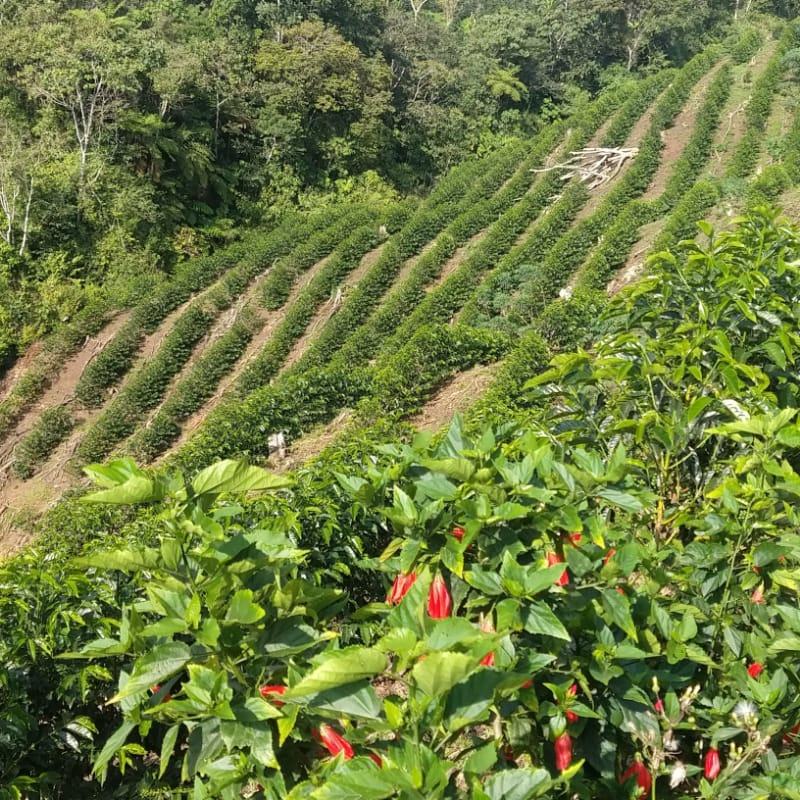
La Chirimoya is a ten-hectare farm at 1,830 metres in the Tabaconas district, in the north of the country. Edilberto Bermeo farms it under certified organic standards.
Peru is mostly known for balanced washed coffees and small-scale production – rarely for lots of this calibre. This natural Geisha is in another league: the kind of coffee that rewrites what you expect from a whole origin.
Origin
Cajamarca is Peru's northernmost region, climbing up towards the border with Ecuador. Tabaconas is a mountain district of cloud forest and some of the richest biodiversity in South America.
The farm sits at 1,830 metres on clay soil. That's high even by Peruvian standards, and it means big swings between day and night temperatures: the plant's cycle slows down, the fruit takes longer to ripen, and it builds up more sugars and aromatic compounds along the way.
The small size is part of the result. Ten hectares is an area a farmer can walk every day, plant by plant – and in a crop where selection decides the final quality, that counts for more than any amount of kit.
Picking is by hand and selective: Bermeo goes back to the same tree several times over the weeks, taking only cherries at peak ripeness. It's the least visible step in the whole chain and the one that shapes all the others, because with a variety like Geisha and a natural process, every underripe or overripe cherry shows up in the final cup.
Variety
Geisha is the most talked-about variety in specialty coffee, and not always deservedly: grown in the wrong conditions, it's just an expensive plant that doesn't yield much.
Originally from Ethiopia, it reached Central America via Costa Rica and shot to international fame in Panama in the early 2000s. It's fragile, prone to disease, needs altitude and shade, and yields far less than a Caturra on the same land. For a small farmer it's a gamble that only pays off if the quality really is high.
But when the conditions are right, it delivers a floral clarity no other variety can touch. At this altitude, with these temperature swings, the conditions are all there.
Process
It's a natural: the oldest method, and also the trickiest to get right.
The cherries aren't pulped but dried whole, with the fruit still clinging to the bean. For weeks the fruit keeps passing sugars and aromatic compounds to the seed inside: the red fruit you taste in the cup comes straight from this step.
It's also the process with the least room for error. One unusually humid day, a layer of cherries that's too thick or a missed turn is all it takes for fermentation to run past the point of control and tip the cup into boozy, vinegary or musty notes. That's why truly great naturals are still relatively rare.
This lot was followed day by day right to the end of drying, and it shows.
In the cup
Strawberry opens the profile, clear and instantly recognisable. Then come raspberry and red cherry, with apricot bridging the fruit and the sweeter side.
Jasmine is there in the aroma, before you've even taken a sip. The finish brings marzipan, honey and a hint of milk chocolate that ties it all together and makes it linger.
The sweetness is big, the body velvety, the clarity spotless: at no point does it lose definition. As it cools, the cup edges towards a red-berry infusion, and that's probably when it's at its best.
Why choose it
Because it proves a Geisha this good doesn't have to depend on fancy infrastructure. No instrument-controlled fermentations, no drying technology, no model-farm set-up: just ten hectares, deep knowledge of every single plant and flawless handling of picking and drying. And it holds its own against lots that cost a lot more.
It's also the coffee for anyone who's never found in Geisha what everyone says is there – who's found it thin, or more interesting to smell than to drink. Here the variety's floral clarity sits on a sweetness and body that make it a complete cup.
How we'd brew it: filter, straight up.
Let it cool as you drink: the profile changes noticeably from the first sip to the last.


What you need to know
Origin
Tabaconas, Cajamarca, Peru – Finca La Chirimoya
Process
Natural
Variety
Geisha
How we’d brew it
Filter
In the cup
Strawberry, raspberry and red cherry, then apricot and jasmine. Finishes with marzipan, honey and milk chocolate.

A profile built at the roaster, roasted on Tuesdays.
We roast on Tuesdays in Aprilia, in small batches, with a profile built at the roaster specifically for this coffee. Who grew it, where, and how it was processed: you'll find all that in the details above.
- Origin
- Tabaconas, Cajamarca, Peru – Finca La Chirimoya
- Variety
- Geisha
- Process
- Natural
